


SAKE blog


If you are familiar with the basic steps of Sake production, you are probably already aware of the fact that Kobo is an essential item in Sake making. Kobo causes fermentation of alcohol, and produces an important element of Sake, scent. This is why Kobo is called base “Moto (元)” of Sake. Some Kobo is managed locally, thus the local Kobo is only available in that specific region and contribute to the creation of unique flavour of Sake.
In this article I focus on Kyoto Kobo, one of the most well-known local Kobo in Japan.
What is local Kobo?
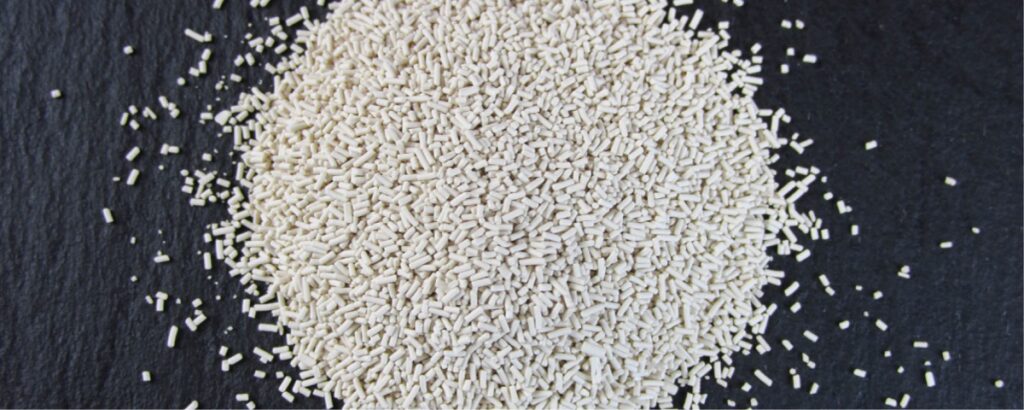
Kobo is rarely grown or self-maintained by breweries. In fact, for most of the cases Kobo is cultivated by the Brewing Society of Japan(日本醸造協会) and distributed to Sake breweries across Japan. Historically, this management of Kobo contributed to the stabilization and improvement of brewing methods among the breweries.
These days the production technic has been well-stabilized and most of the breweries have almost no problem producing Sake above a certain level of quality. Therefore, what adds extra value is the brand with localness as represented by Geographical Indication, GI. Not only water and rice but Koji also adds local characters to Sake. Some Kobo has a large impact in transforming the quality, namely, aroma of Sake, and fermentation conditions need to be taken into account when selecting Kobo. Kyoto Kobo has been cultivated to match the characteristics to produce their Sake specifically in Kyoto.
History of Kyoto Kobo
Kyoto Kobo has been developed by Kyoto Municipal Institute of Industrial Technology and Culture (京都市産業技術研究所) since 1960s. The Kobo was distributed to the breweries inside Kyoto city over the time. More than 100 types of Kobo has been repeatedly selected and analyzed over 50 years to reach the current form of Kyoto Kobo. Currently there are 5 different Kobo under the umbrella of Kyoto Kobo. Eligible breweries can receive Kobo that is suitable to express the quality and style of their product.
Characteristics of Kyoto Kobo
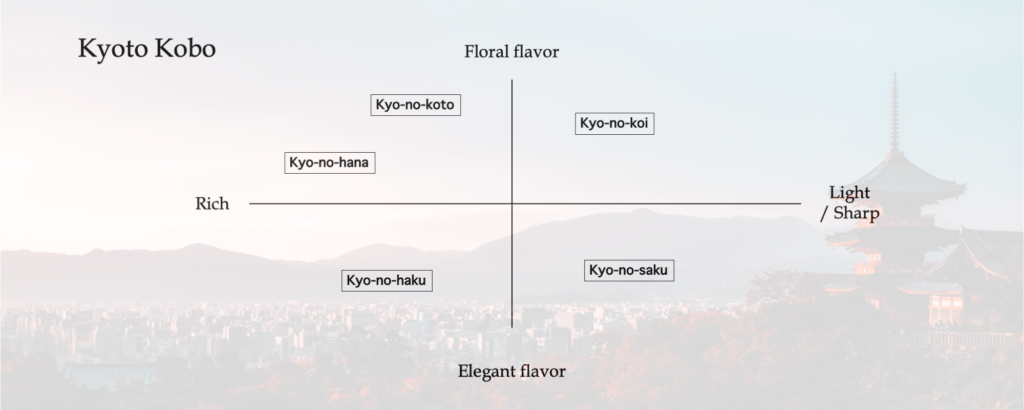
5 types of Kyoto Kobo currently available are as follows:
Kyo-no-koto (京の琴)
The Kyo-no-koto kobo forms ethyl caproate(=ethyl hexanoate) that emits the aroma of green apples. It makes fresh Ginjo style Sake.
Kyo-no-hana (京の華)
The Kyo-no-hana Kobo produces isoamyl acetate that features sweet aroma of bananas. Sake with this Kobo ends up in rich Ginjo style.
Kyo-no-saku (京の咲)
The Kyo-no-saku Kobo helps the formation of malic acid, a type of organic acid, forming a refreshing acidity
Kyo-no-haku (京の珀)
The Kyo-no-haku Kobo produces Kohaku acid, one of the Umami compositions.
Kyo-no-koi(京の恋)
The Kyo-no-koi Kobo produces ethyl caproate (=ethyl hexanoate) and Isoamyl acetate as well as malic acid.
Sake made from these Kyoto Kobo expresses its originality by providing different aroma and flavours. Thus the serving temperatures, pairing options, types of glasses and even the drinking occasions can vary as a result of different use of Kobo. That implies the possibilities of expanding the variety of Sake by using different Kobo.
In fact, Kyoto is not the only location that cultivates local Kobo. There exist a number of local Kobo in Japan. The selection of Kobo is often considered as part of special technics of Toji, mater of Sake making, therefore the name of Kobo is rarely disclosed to keep the secret recipe of Sake. Nevertheless, Sake made with local Kobo is often exception from the norm since the breweries would love to promote its local Kobo to express its uniqueness and use it as a promotional catch. If you have a chance to check Sake bottles, pay attention whether there is a reference to Kobo. If the Sake is made from one of the local Kobo, you may find a specific name of Kobo on the bottle.

President & CEO, Kobayashi Junzo Shoten Co., Ltd.
Based in Osaka, I lead Kobayashi Junzo Shoten, a sake wholesaler founded in 1890. Through the cultural richness of Japanese sake, my mission is to connect people and bring smiles to dining tables around the world.
While technology continues to make the world feel smaller, the stories and traditions behind sake brewing can easily fade into the background. I see my role as a bridge—sharing the passion of brewers, opening doors for new audiences, and delivering sake in a way that feels more approachable and relatable.
I enjoy visiting sake breweries, learning about new rice varieties and brewing techniques, and spending time with toji (master brewers) and kurabito (brewery workers) to experience the spirit of sake-making firsthand. On this blog, I’ll share those encounters, my personal insights, and tips to help you enjoy sake even more.
Thank you for reading, and I look forward to connecting with you.
Latest Articles

One stop Quotation Inquiry System
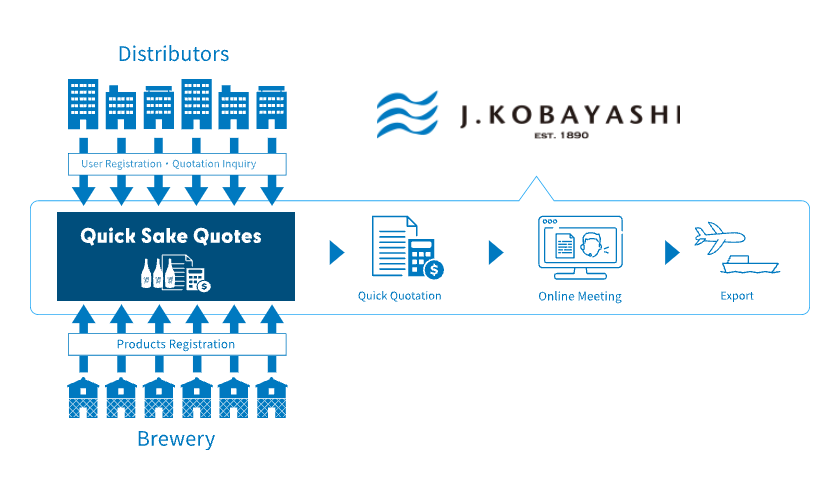
Quick SAKE Quote (QSQ) is a quotation inquiry system where you can receive quotations instantly. In most cases, it takes time to get a quotation for importing Sake, especially when dealing with several breweries. If you finally get an answer after a week or so, the response may be, “They already have a partner in your country,” and you have wasted your valuable time. Let's start your Sake import business efficiently with QSQ!
Read About QSQ
Contact Us
Quick SAKE Quote(QSQ hereafter) is a quotation inquiry system you can receive Quotation instantly.
Join our mailing list
Quick SAKE Quote(QSQ hereafter) is a quotation inquiry system you can receive Quotation instantly.
we will share content that:
Clear and explain the point without too much words.Contains at least one figure or clear example.Make you learn something new, or at least to remind you of it.