


SAKE blog


Published: 2020.05.01
Last modified: 2026.09.13
Karakuchi? Amakuchi? Dry? Sweet? What is the SMV of Japanese Sake? Nihonshudo 日本酒度
When you choose Japanese Sake to drink for your night, how do you judge the Sake?
Is it price? type of rice? where it from? or the brand name?
SMV, so called Nihonshudo, is one key to choose Sake. I think most of you have seen SMV or Nihonshudo(日本酒度) on the label, but what actually it is?
This time ikki deliver information about SMV and what it represents.
What does SMV show?
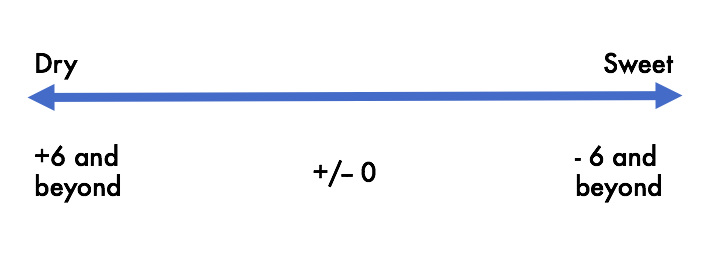 Generally, SMV is the key to find out the taste of Sake, and normally it is shown in the number. Please refer to the table above, it explains the relationship between dryness/sweetness and numbers.
As it gets bigger the Sake gets more dry. As it gets smaller beyond the minus(-) it gets sweeter. Sometimes it gets beyond + or -6, and they are super dry or sweet. There is the Sake with SMV of +66!
But, what are those numbers and why – means sweet?
What is the number in SMV?

SMV is a specific gravity compared with water. At 15℃, measure the specific gravity with water to find out it has high or low specific gravity. When Sake contains more sugar it has more specific gravity, in other words get heavier. As a result it shows the number in -.
Does less sugar means dry?
The concept of dry in Japan, in Japanese Karakuchi 辛口, and in English is slightly different. It may leads to less finish or less sugar or other elements might affect how people feel about the taste of Sake.
In addition, when we talk about the taste of Sake SMV it is mostly talked with acidity, because as the Sake is less acid it get more dry.
Also, crispiness, in Japanese Kire 切れ, is different to dry, but similar in taste or maybe in a relationship with.
As a consequence, please just refer to the number as a guide of the taste, and kindly try by yourself, because every people feels differently.
See you in the next articles!

President & CEO, Kobayashi Junzo Shoten Co., Ltd.
Based in Osaka, I lead Kobayashi Junzo Shoten, a sake wholesaler founded in 1890. Through the cultural richness of Japanese sake, my mission is to connect people and bring smiles to dining tables around the world.
While technology continues to make the world feel smaller, the stories and traditions behind sake brewing can easily fade into the background. I see my role as a bridge—sharing the passion of brewers, opening doors for new audiences, and delivering sake in a way that feels more approachable and relatable.
I enjoy visiting sake breweries, learning about new rice varieties and brewing techniques, and spending time with toji (master brewers) and kurabito (brewery workers) to experience the spirit of sake-making firsthand. On this blog, I’ll share those encounters, my personal insights, and tips to help you enjoy sake even more.
Thank you for reading, and I look forward to connecting with you.
Latest Articles

One stop Quotation Inquiry System
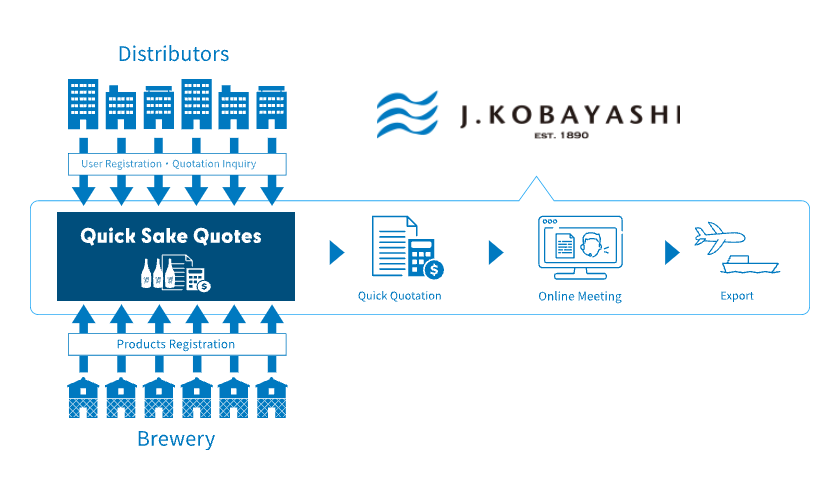
Quick SAKE Quote (QSQ) is a quotation inquiry system where you can receive quotations instantly. In most cases, it takes time to get a quotation for importing Sake, especially when dealing with several breweries. If you finally get an answer after a week or so, the response may be, “They already have a partner in your country,” and you have wasted your valuable time. Let's start your Sake import business efficiently with QSQ!
Read About QSQ
Contact Us
Quick SAKE Quote(QSQ hereafter) is a quotation inquiry system you can receive Quotation instantly.
Join our mailing list
Quick SAKE Quote(QSQ hereafter) is a quotation inquiry system you can receive Quotation instantly.
we will share content that:
Clear and explain the point without too much words.Contains at least one figure or clear example.Make you learn something new, or at least to remind you of it.