


SAKE blog


Published: 2026.03.19
Last modified: 2026.03.19
Sake storage temperature – how to store Japanese Sake and ideal temperature

When you have Japanese Sake at your place, you do not always drink them at once. Sometimes, you buy them for the special occasion, such as Christmas night, or when you find the Sake which you have been looking for you may keep them to avoid the risk of OUT OF STOCK. In addition, if you are in Sake business it is crucial to keep Sake.
If you do not have the knowledge to store Sake, it will cause serious damage to the product especially when you are an importer as the storage time is long.
This time, ikki deliver the information about how to store Sake in your business and also at your home.
Storage condition
When you look at the back label of Sake, you can see how to store Sake as a tip. It is because in most of the countries it is mandatory to put the advise to store Sake to maintain the quality of Japanese Sake. On the label, you can find the sentence “Keep in cold and dark place”, but why do we need to keep under such condition. When we keep Sake we want to avoid Sake the change in quality unexpectedly. With the wrong condition, Sake is easy to get unexpected taste and smell. Basically there are 2 things you need to be careful: Ultra Violet ray and Temperature
Ultra Violet ray
Ultra Violet(UV) is one thing which affect the quality of Japanese Sake bottled and stored. With Ultraviolet Sake will get colored and unexpected smell called “Sunlight odor”(日光臭). As it says Sunlight smell, Sake can be easily affected by sun light, but also with room lights as it contains UV. Therefore it is mentioned at the back label “Keep in dark place”.
Temperature
Temperature is another thing affects the quality of Sake. When you store Sake at the high temperature, Sake will get unexpected smell called “Hineka”. In addition, it has to be careful to avoid the change in the temperature. It is because Sake is under aging process even in bottles and temperature is the elements decide the speed of the aging process.
Storage Temperature
As mentioned above, the temperature decide the speed of aging process of Japanese Sake. So which temperature we can store Sake? Answering to the question, there are 2 temperature to choose according to the situation and the type of Sake.
15℃ and under
Most of Sake is pasteurized “Hiire” twice before the bottling, in the other words it is difficult to get affected comparing to Namazake or Namachozoshu type Sake. When you keep those Sake at your place, you can keep at 15℃ and it will last 1 year after bottling date.
5℃ and under
When Sake you have is Namazake, Namachozoshu or Ginjo type Sake, it is recommended to store at 5℃ and under. Those Sake are much more delicate than ordinary Sake so please keep them at low temperature.
For the professionals, it is recommended to store all the type of Sake under 5℃. It is because we cannot guess how long people will keep Sake at home and if professionals keep Sake at 15℃ and customers also keep at same temperature, the aging process speed up unexpectedly.
Other tips
When store Sake, it is recommended to store the bottle vertically. There are 2 reasons to put the bottle vertically in your storage.
Metal cap
When you lie the bottle down, Sake touches with metal cap in the bottle. If you leave as it is, it reacts with metal and it causes unexpected change in the quality of Japanese Sake.
Surface Area
When you lie the bottle down, it increase the surface area of Sake touches with air. It accelerate the aging process in the bottle.
Hope you learn about how to store Sake.
When you keep Sake at home please follow what mentioned above and enjoy Sake

President & CEO, Kobayashi Junzo Shoten Co., Ltd.
Based in Osaka, I lead Kobayashi Junzo Shoten, a sake wholesaler founded in 1890. Through the cultural richness of Japanese sake, my mission is to connect people and bring smiles to dining tables around the world.
While technology continues to make the world feel smaller, the stories and traditions behind sake brewing can easily fade into the background. I see my role as a bridge—sharing the passion of brewers, opening doors for new audiences, and delivering sake in a way that feels more approachable and relatable.
I enjoy visiting sake breweries, learning about new rice varieties and brewing techniques, and spending time with toji (master brewers) and kurabito (brewery workers) to experience the spirit of sake-making firsthand. On this blog, I’ll share those encounters, my personal insights, and tips to help you enjoy sake even more.
Thank you for reading, and I look forward to connecting with you.
Latest Articles
One stop Quotation Inquiry System
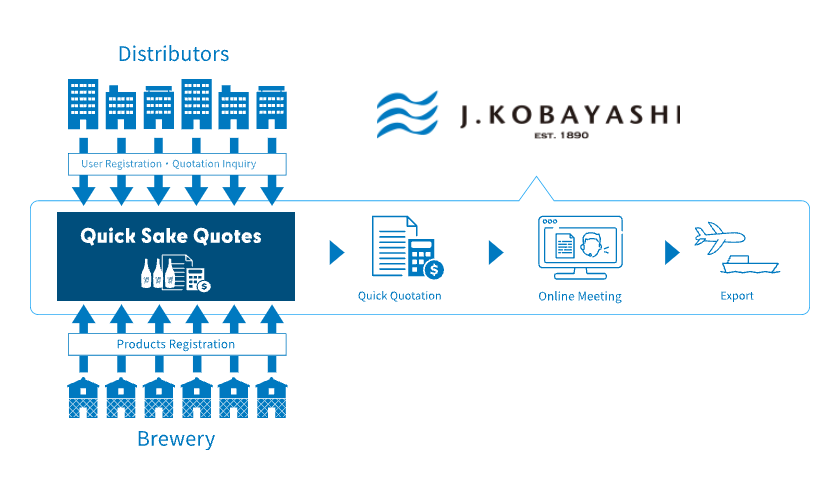
Quick SAKE Quote (QSQ) is a quotation inquiry system where you can receive quotations instantly. In most cases, it takes time to get a quotation for importing Sake, especially when dealing with several breweries. If you finally get an answer after a week or so, the response may be, “They already have a partner in your country,” and you have wasted your valuable time. Let's start your Sake import business efficiently with QSQ!
Read About QSQ
Contact Us
Quick SAKE Quote(QSQ hereafter) is a quotation inquiry system you can receive Quotation instantly.
Join our mailing list
Quick SAKE Quote(QSQ hereafter) is a quotation inquiry system you can receive Quotation instantly.
we will share content that:
Clear and explain the point without too much words.Contains at least one figure or clear example.Make you learn something new, or at least to remind you of it.