


SAKE blog


Published: 2023.02.10
Last modified: 2026.10.26
Japanese rum – the gift given from the nature of the Southern islands in Japan

It is likely that most of us associate rums with warm regions like the Caribbean Island. Few of us can think of Japan-made rums. The production of Japanese rums is limited, however there exists a genre of Japanese rums. I focus on Japan made rums.
Production sites for Japanese rum

The main ingredient of rums, sugarcane is produced in warm regions. This is why large amount of rum is produced in regions with warm climate. Precisely speaking, Okinawa Prefecture, Kagoshima Prefecture, Kochi Prefecture and Ogasawara Islands are the main production sites of Japanese rums.
The first version of rums was said to be produced in the Ogasawara Islands in 1830s, when Western-origin residents of the Ogasawara Islands started to produce a primitive version of rums through a natural fermentation. Lately, Okinawa prefecture produces the largest amount of rum in Japan.
Examples of Rum made in Japan
Rurikakesu from Takaoka jozo, Tokuhoshima, Oshima, Kagoshima
The rum was named after birds which only live on Amami-oshima and Tokunoshima, Lidth’s Jay (Garrulus lidthi) whose Japanese name is ‘rurikerasu’.
It is produced solely from sugarcane, through 3-time distillation and is left in an oak barrel for an aging. Rurikerasu is said to be a pioneer of Japanese rum industries.
CORCOR from Grace Rum, Minamidaito, Shiri, Okinawa
CORCOR is produced with sugarcane exclusively from Minamidaito Village of Okinawa Prefecture. Due to the area’s specialty, high-quality sugarcane, CORCOR is made without added sugar, flavours nor colours. As a result, it becomes a white rum
Ie Rum Santa Maria from Iejima Bussan Centre, Kunigami, Okinawa
Using sugarcane from Ie Island, juice of sugarcane is frozen with high intensity syrup, thus
rum is always produced from the de-frozen fresh sugarcane juice. Original flavour of Ie Island
is well reflected in the product, which is the producer’s major aim.
Ogasawara rum by Ogasawara Rum and Liquor Ltd. From Haha Island, Ogasawara, Tokyo
Ogasawara Rum is from Ogasawara Islands which are designated as World Natural Heritage in 2011. Sugarcane is grown by rich nature of Ogasawara Islands. Their sugarcane features rich sweetness and powerful flavours that we can easily associate with the Sun of subtropical zone.
Future of Japanese rum production
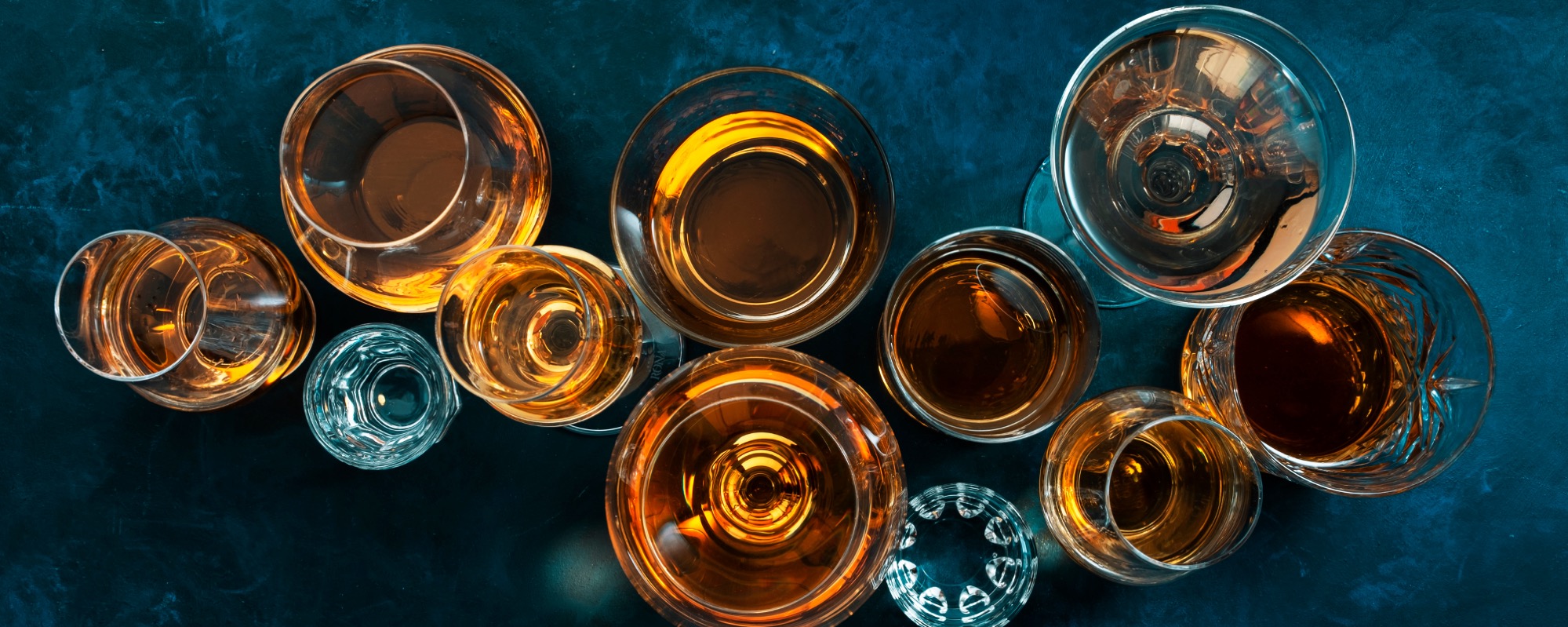
Rum available in Japan are mostly imported, and the number of Japan-produced rum is still limited. However the new research developments and projects are ongoing. The market size of rum is not large enough and continue to expand gradually. Here are some examples of major rum producing projects.
RHUM DE LA PÉNINSULE DE BOSO PROJECT Rhum de la Peninsule de Boso Project
Distillery was founded at one of the old houses of Boso Peninsula of Chiba Prefecture. Sugarcanes are grown organically for the exclusive use of rum production. The distillery started its distillation since August 2022 to produce an Agricole rum, still a scarce type of rum. It is going to be the first Chiba-produced rum on its completion of distillation.
One rum project
The project is led by Mizuho Shuzo of Okinawa Prefecture to produce rum using sugarcanes grown in Okinawa. Black sugar from 8 islands of Okinawa is used to produce its rum. The focus of the project is to emphasize the characteristics of ingredients from each island and to reflect uniqueness into the completed rum.
Rum is not yet a very common alcohol in Japan, so the population who are familiar with rum or prefer rum over other types of alcohol is limited. However there are Japan-made rums of high-quality which can be appreciated in the international market. Japan-made rums have a high potential to draw more attention from within Japan and overseas for their uniqueness.
ikki is looking for a partner who can post your knowledge or activity on our media. If you are interested please contact us through CONTACT page.

President & CEO, Kobayashi Junzo Shoten Co., Ltd.
Based in Osaka, I lead Kobayashi Junzo Shoten, a sake wholesaler founded in 1890. Through the cultural richness of Japanese sake, my mission is to connect people and bring smiles to dining tables around the world.
While technology continues to make the world feel smaller, the stories and traditions behind sake brewing can easily fade into the background. I see my role as a bridge—sharing the passion of brewers, opening doors for new audiences, and delivering sake in a way that feels more approachable and relatable.
I enjoy visiting sake breweries, learning about new rice varieties and brewing techniques, and spending time with toji (master brewers) and kurabito (brewery workers) to experience the spirit of sake-making firsthand. On this blog, I’ll share those encounters, my personal insights, and tips to help you enjoy sake even more.
Thank you for reading, and I look forward to connecting with you.
Latest Articles
One stop Quotation Inquiry System

Quick SAKE Quote (QSQ) is a quotation inquiry system where you can receive quotations instantly. In most cases, it takes time to get a quotation for importing Sake, especially when dealing with several breweries. If you finally get an answer after a week or so, the response may be, “They already have a partner in your country,” and you have wasted your valuable time. Let's start your Sake import business efficiently with QSQ!
Read About QSQ
Contact Us
Quick SAKE Quote(QSQ hereafter) is a quotation inquiry system you can receive Quotation instantly.
Join our mailing list
Quick SAKE Quote(QSQ hereafter) is a quotation inquiry system you can receive Quotation instantly.
we will share content that:
Clear and explain the point without too much words.Contains at least one figure or clear example.Make you learn something new, or at least to remind you of it.