


SAKE blog



Have you seen the same brands of Sake have some varieties such as Ara-bashiri, Naka-dori and Seme? These terms are used to specify the timings of pressing during the Sake production. How are they different? Let us explore Arabashiri, Nakadori and Seme.
Joso (上槽)
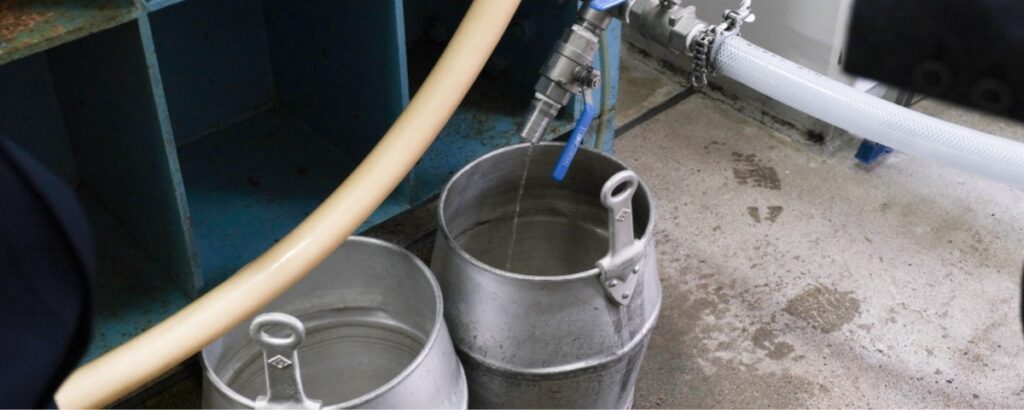
To understand the differences in Arabashiri, Nakadori and Seme, it is important to roughly understand the process of Joso (pressing). Joso, simply put, is the process to divide the muddy ingredients called “Moromi” a blend of fermented rice, rice koji and water, into Sake and Sake lees. There are mainly 3 types of methods in Joso. They are 1.)Pressing by an automatic pressing machine, 2.)Fune-shibori and 3.)Bag-hanging. In order to maximize the characteristics of Sake, a suitable method of pressing is selected by professional brewers. The timing for pressing is critical to determine the flavour of Sake, especially for Daiginjo-shu, and it is difficult, so its timing is carefully observed using the artisan’s senses from experiences and chemical analysis.
Features of Arabashiri あらばしり
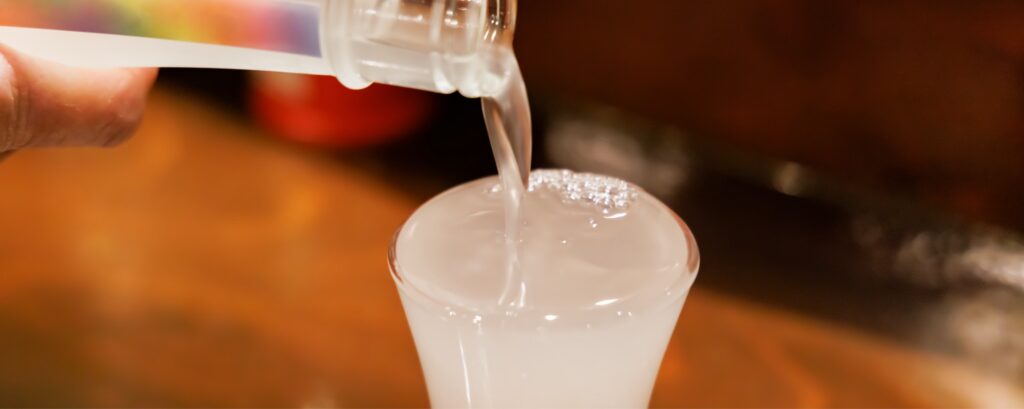
Sake naturally dropped off using Moromi’s own weight is called Arabashiri. It comes as the first drops from Moromi, therefore, it is fresh and usually highly scented containing the rough powerful characters of Moromi. The liquid is not transparent and a little muddy, having a little lower degree of alcohol compared to the following two types. Due to its scarcity, Arabashiri Nama-genshu has a premium value and it used to be only recognised by brewers working in the breweries.
Features of Nakadori
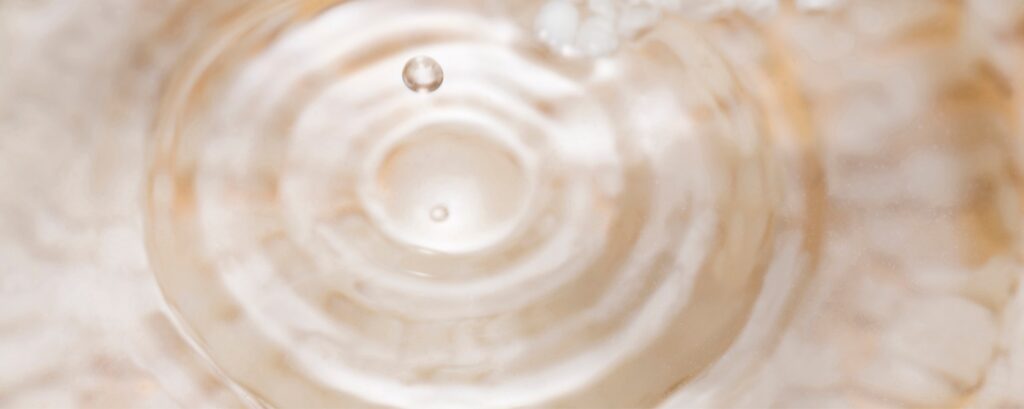
After the drops of Arabashiri naturally come out, the medium drops taken out by a certain pressing. It is called Nakadori. A majority of Sake obtained from 1-time Joso is Nakadori. As it tends to have a stable quality, this part is often the one to be offered at competitions. Nakadori is alternatively called Nakagumi.
Features of Seme
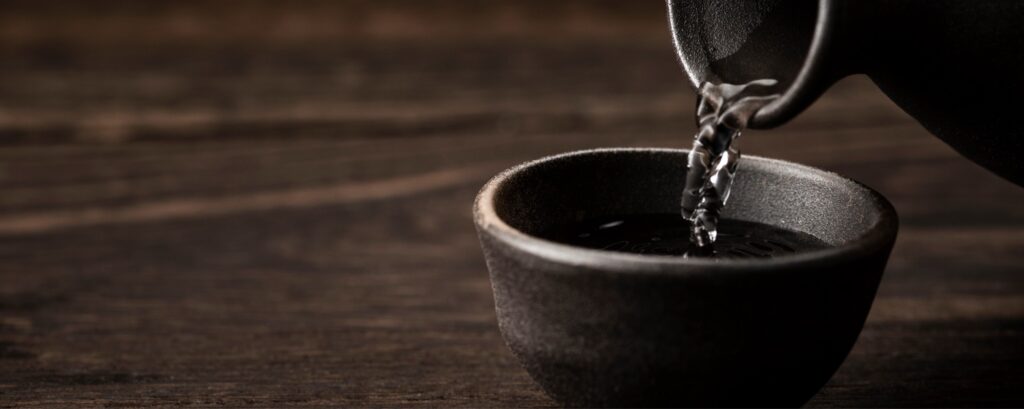
Seme Sake is what is obtained at the end of Joso process with a high volume of pressure. In contrast to Arabashiri, Seme has a higher alcohol degree with a powerful flavour. It could contain impurified flavours, as well as dense umami coming out from Moromi. Because of its high contents of impurified flavours, this part is not suitable for Daiginjo-shu.
The naming is used for indication, however, there are no clear distinction lines among Arabashiri, Nakadori and Seme. Each brewery has their own standard how to call their Sake by Arabashiri, Nakadori and Seme. When bottles do not mention none of them, it is often the case that the contents are the blends of Sake pressed at different points. Don’t you find it interesting to compare Sake pressed at different points as they express unique characters? More often than not, bottle labels with the signs of Arabashiri and Nakadori are the messages from breweries that the Sake has unique characters so they would like us to taste the differences. I hope you taste and enjoy the differences of Sake pressed at different points!

President & CEO, Kobayashi Junzo Shoten Co., Ltd.
Based in Osaka, I lead Kobayashi Junzo Shoten, a sake wholesaler founded in 1890. Through the cultural richness of Japanese sake, my mission is to connect people and bring smiles to dining tables around the world.
While technology continues to make the world feel smaller, the stories and traditions behind sake brewing can easily fade into the background. I see my role as a bridge—sharing the passion of brewers, opening doors for new audiences, and delivering sake in a way that feels more approachable and relatable.
I enjoy visiting sake breweries, learning about new rice varieties and brewing techniques, and spending time with toji (master brewers) and kurabito (brewery workers) to experience the spirit of sake-making firsthand. On this blog, I’ll share those encounters, my personal insights, and tips to help you enjoy sake even more.
Thank you for reading, and I look forward to connecting with you.
Latest Articles
One stop Quotation Inquiry System
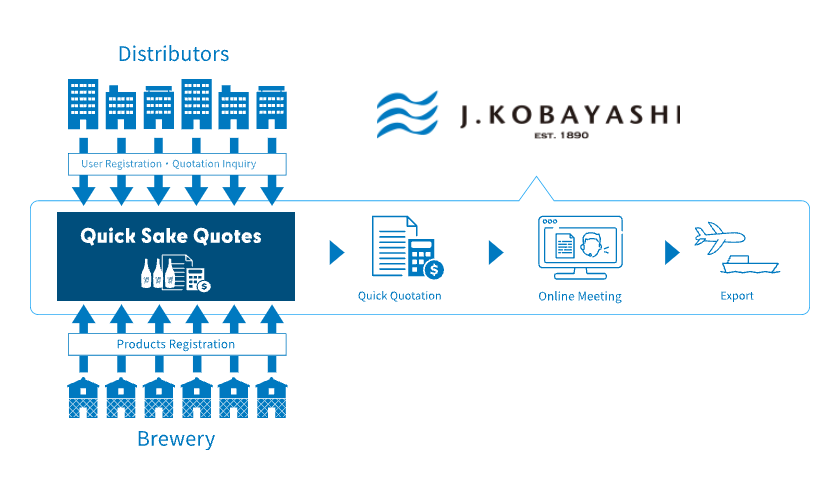
Quick SAKE Quote (QSQ) is a quotation inquiry system where you can receive quotations instantly. In most cases, it takes time to get a quotation for importing Sake, especially when dealing with several breweries. If you finally get an answer after a week or so, the response may be, “They already have a partner in your country,” and you have wasted your valuable time. Let's start your Sake import business efficiently with QSQ!
Read About QSQ
Contact Us
Quick SAKE Quote(QSQ hereafter) is a quotation inquiry system you can receive Quotation instantly.
Join our mailing list
Quick SAKE Quote(QSQ hereafter) is a quotation inquiry system you can receive Quotation instantly.
we will share content that:
Clear and explain the point without too much words.Contains at least one figure or clear example.Make you learn something new, or at least to remind you of it.