


SAKE blog


Have you seen labels on bottles with terms like Kimoto (生酛) or Yamahai (山廃)?
Otherwise, you might have encountered the words somewhere. Can you associate the actual flavours with these terms? I assume that majority of people are not very confident in instantly imagining these flavours even if they have heard of the words before. The terms of Kimoto and Yamahai both refer to the methods of Shubo making which is critical in production of Sake. This article focuses on Kimoto and Yamahai methods during Shubo making.
What are Yamahai-jikomi and Kimoto-jikomi?
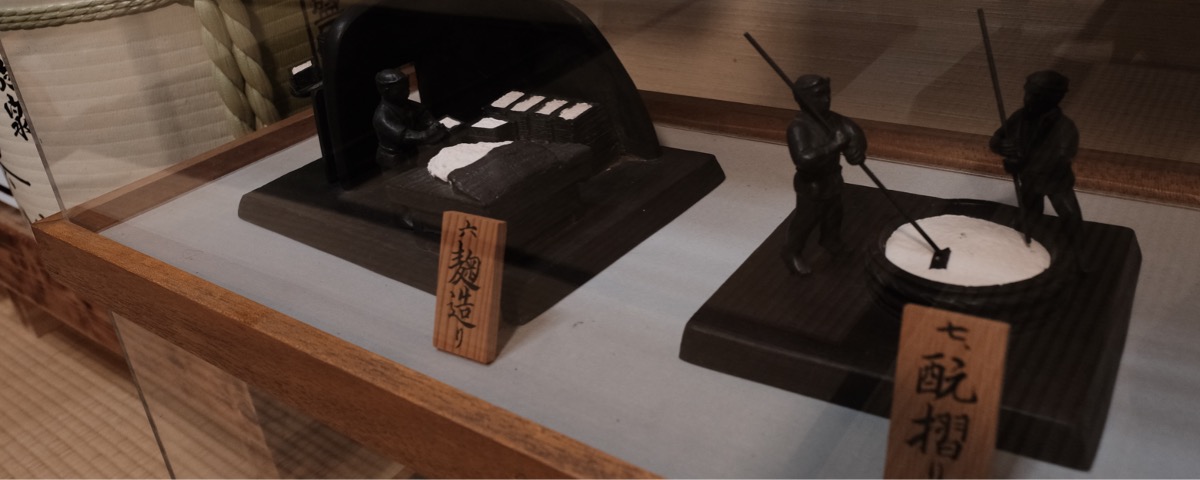
Shubo making is considered to be the most important step for the production of Sake. It is often said quality of Sake d attributes to the quality of Shubo. This is why Shubo is also called as Moto, base of Sake.
Shubo is a collection of Kobo which transforms glucose into alcohol. Alongside the alcohol production, there are also harmful bacteria produced inside Shubo. To prevent the increase of bacteria, lactic acid needs to be present in Shubo. Yamahai-jikomi and Kimoto-jikomi are the terms of methods to acquire lactic acid naturally.
The difference of Yamahai and Kimoto
Methods for Shubo making can be roughly divided into 2 categories.
One is called Sokujo-kei (速醸系), rapid fermentation style, and the other is Kimoto-kei (生酛系), Kimoto style. Sokujo-kei is a method where ready-made lactic acid is manually poured into Shubo. The cost of production is kept low. What is more, it does not require intensive human labour. Therefore, most breweries apply the Sokujo-kei method due to its convenient usage.
In contrast, no artificial lactic acid is added in Kimoto-kei method. Instead, brewers wait for the natural creation of lactic acid in Shubo by giving sufficient time.
Precisely speaking, Kimoto-kei method is divided into 2 sub-categories, Kimoto (生酛) and Yamahai (山廃).
Both Kimoto and Yamahai methods have in common that they wait for the natural creation of lactic acid within Shubo. The prominent difference is whether there exists a process called Yamaoroshi (山卸). Wh
Yamaoroshi is a process where rice and koji are mashed by human labour using huge wooden sticks. This task is labour-intensive, and unfortunately the mashing process sometimes ends up in a failure despite all the hard work put. To optimize the time, quality and labour required, Yamaoroshi method is less common these days.
Yamaoroshi was historically believed to be an important process in Sake making. However, researchers discovered an important fact that Koji can dissolve rice even without the process of Yamaoroshi. As a result hard labour of Yamaoroshi was no longer considered essential. Yamahai is an abbreviation for Yamaoroshi Haishi, meaning omitting Yamaoroshi. Currently, Sake made using Sokujo-kei method accounts for approximately 90% of all Sake production volume, whereas 9% is made by Yamahai method, and 1% is by Kimoto-method.
Flavours of Yamahai and Kimoto.

Yamahai and Kimoto methods require much longer time of production and extra attention, which contributes to a deeper complex flavour with high acidity. Kobo that is naturally born through the fermentation process is strong and can survive for a longer period. Kobo can remain active and they succeed in extracting the best taste of rice. Sake made in this style therefore maximizes the potentials of rice and makes it possible to create a complex body that genuinely reflects the character of rice even with an impure taste.
Served as Kan(燗), at a warm temperature, Sake made in Kimoto and Yamahai methods optimizes its taste by expressing the detailed characteristics of rice.
Due to its intensive work, the majority of Sake making is performed by using Sokujo-kei Shubo making. Kimoto and Yamahai require more attention since it relies on natural production of lactic acid during the fermentation. If you have not tasted Kimoto or Yamahai style, I strongly recommend you try it and feel the difference in the expressions of Sake.
ikki is looking for a partner who can post your knowledge or activity on our media. If you are interested please contact us through CONTACT page.

President & CEO, Kobayashi Junzo Shoten Co., Ltd.
Based in Osaka, I lead Kobayashi Junzo Shoten, a sake wholesaler founded in 1890. Through the cultural richness of Japanese sake, my mission is to connect people and bring smiles to dining tables around the world.
While technology continues to make the world feel smaller, the stories and traditions behind sake brewing can easily fade into the background. I see my role as a bridge—sharing the passion of brewers, opening doors for new audiences, and delivering sake in a way that feels more approachable and relatable.
I enjoy visiting sake breweries, learning about new rice varieties and brewing techniques, and spending time with toji (master brewers) and kurabito (brewery workers) to experience the spirit of sake-making firsthand. On this blog, I’ll share those encounters, my personal insights, and tips to help you enjoy sake even more.
Thank you for reading, and I look forward to connecting with you.
Latest Articles
One stop Quotation Inquiry System
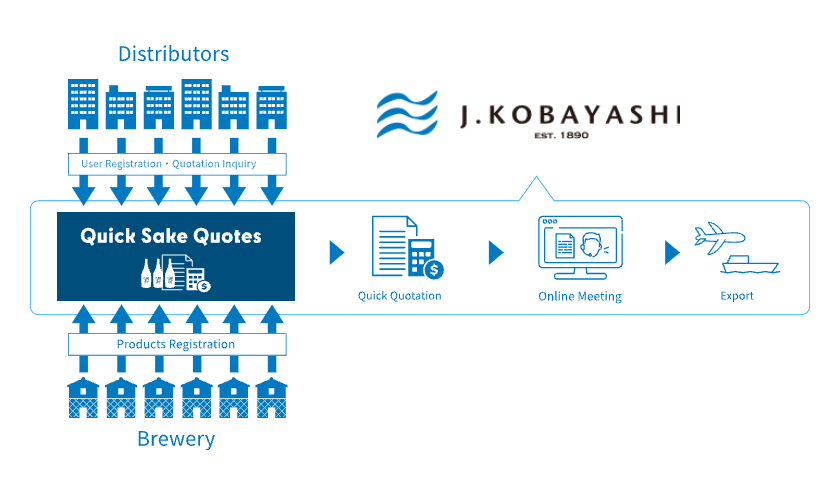
Quick SAKE Quote (QSQ) is a quotation inquiry system where you can receive quotations instantly. In most cases, it takes time to get a quotation for importing Sake, especially when dealing with several breweries. If you finally get an answer after a week or so, the response may be, “They already have a partner in your country,” and you have wasted your valuable time. Let's start your Sake import business efficiently with QSQ!
Read About QSQ
Contact Us
Quick SAKE Quote(QSQ hereafter) is a quotation inquiry system you can receive Quotation instantly.
Join our mailing list
Quick SAKE Quote(QSQ hereafter) is a quotation inquiry system you can receive Quotation instantly.
we will share content that:
Clear and explain the point without too much words.Contains at least one figure or clear example.Make you learn something new, or at least to remind you of it.